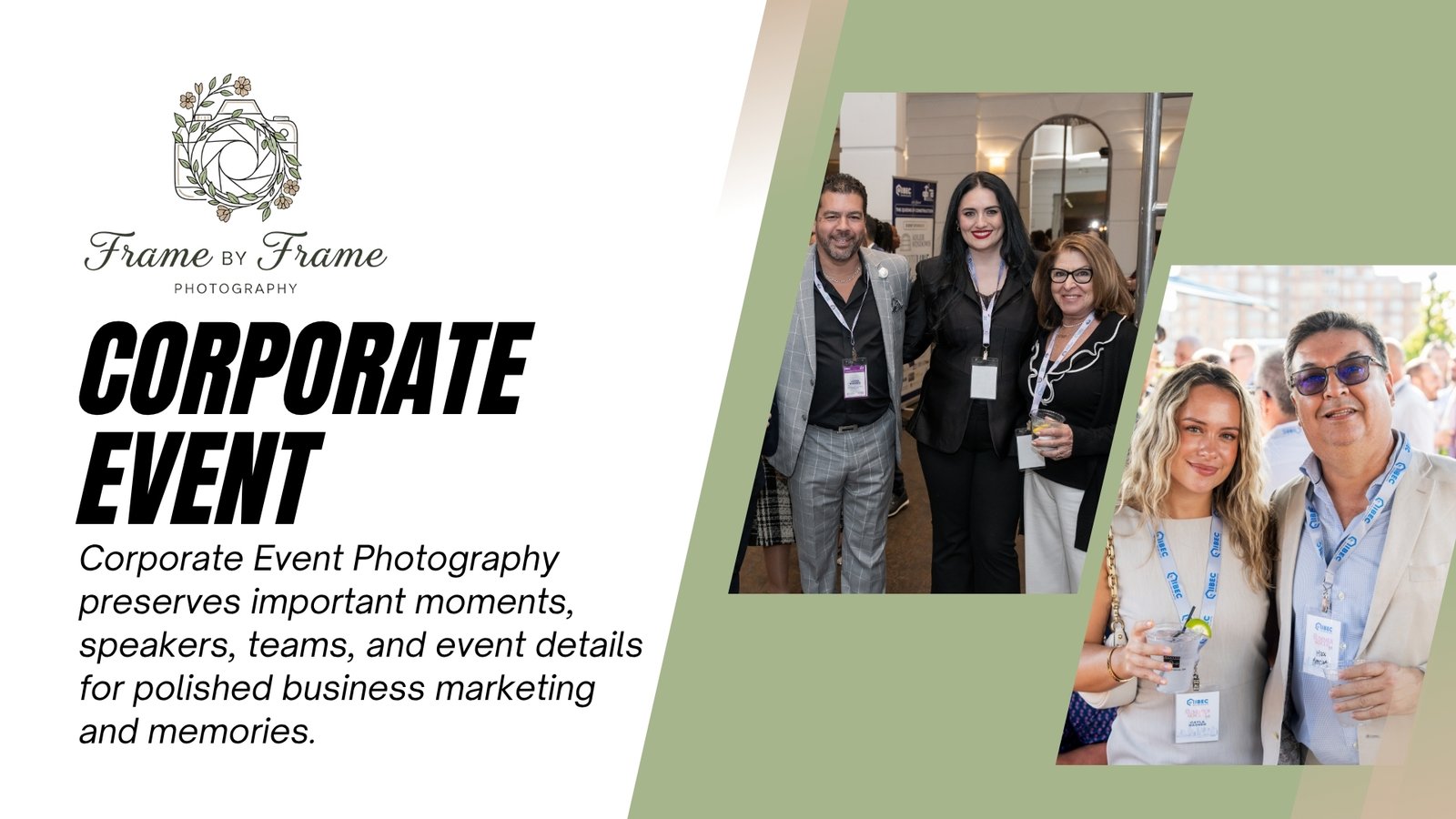
If you have ever tried to plan a corporate event in New York City, you already know the city does not slow down for anyone, including your photographer. Between tight load-in windows at Midtown hotels, building security that wants a certificate of insurance before anyone touches a lens cap, and executives who have exactly four minutes for a portrait before their next call, corporate event photography in New York City is its own discipline. It is not the same job as shooting a wedding in the Hudson Valley or a birthday party in Queens. It requires speed, discretion, technical control over difficult lighting, and a working knowledge of how this city’s venues actually operate.
At Frame By Frame USA, this is the work we do every week, across boroughs and industries, from finance and law firms in the Financial District to tech launches in SoHo and nonprofit galas on Park Avenue. This guide walks through what corporate event photography actually involves, how pricing works in this market, how professional photographers handle lighting and technique on site, and what to look for before you book anyone for your next business event.
What Is Corporate Event Photography?
Corporate event photography is the practice of documenting business gatherings, from a 50-person leadership offsite to a 2,000-person industry conference, in a way that serves marketing, recruiting, press, internal communications, and future sponsorship decks. Unlike casual event photography, corporate work has to hold up under scrutiny. Images might end up on a company’s homepage, in a press release, on LinkedIn, or in a board deck a year later. That raises the bar on lighting, composition, and consistency well above what a personal event might require.
A good corporate event photographer is not just capturing what happened. They are producing an asset library. Every keynote photo, candid networking shot, and branded step and repeat image needs to look intentional, well lit, and usable across multiple channels without additional editing.

Why New York City Businesses Need Professional Event Photography
New York is one of the most competitive business markets in the world, and that competition shows up in how companies present themselves. A poorly lit, awkwardly cropped photo from a product launch does more damage to a brand than no photo at all. Professional event photography solves a few very specific business problems:
- It gives marketing teams real content for social media, websites, and press outreach without waiting weeks for usable images.
- It provides recruiting and HR teams with authentic photos of company culture, which performs far better than stock imagery on careers pages.
- It creates a visual record for sponsors and stakeholders who need proof that an event delivered on attendance and engagement.
- It captures executive moments, keynotes, panel discussions, and award presentations that get reused in annual reports and investor materials.
- It supports PR efforts, since publications and trade outlets often ask for high-resolution, properly lit images before they will run a story.
In a city where first impressions move fast, whether that is a scroll through LinkedIn or a glance at a conference recap email, the quality of your event photography quietly shapes how your brand is perceived.
Types of Corporate Events We Cover in NYC
Corporate event photography is not one job. It changes depending on the format, the venue, and the goal of the event. Frame By Frame USA regularly covers:
- Conferences and multi-day summits, including keynote sessions, breakout rooms, and networking receptions
- Product launches and brand activations, particularly in SoHo, Chelsea, and the Meatpacking District
- Corporate galas, award dinners, and fundraising events
- Executive leadership offsites and board meetings
- Panel discussions and fireside chats
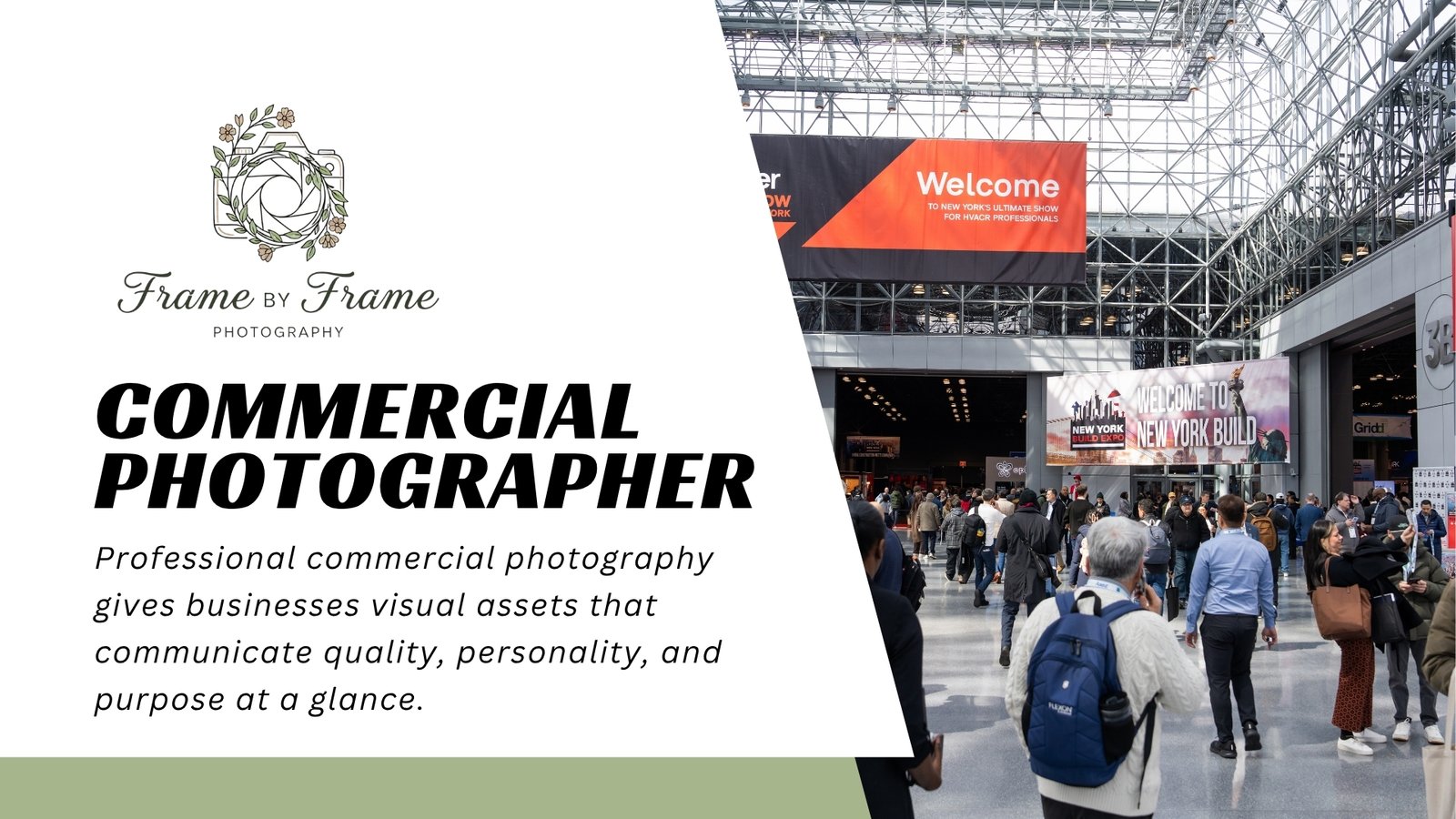
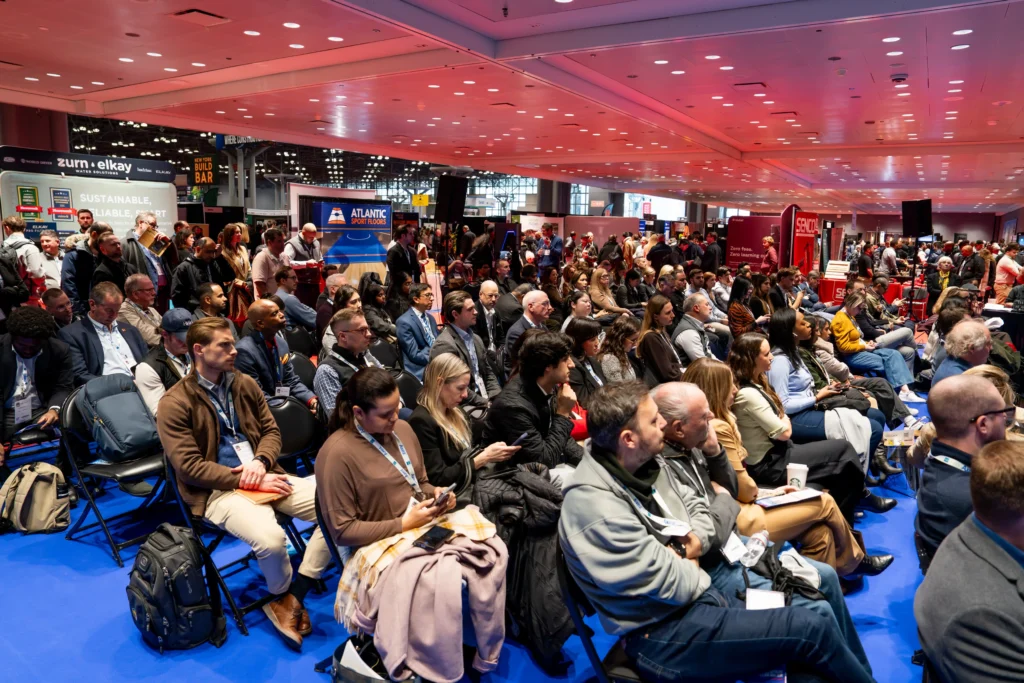
- Trade shows and expos at venues like the Javits Center
- Company milestone celebrations and holiday parties
- Press events and media days
- Team-building events and corporate retreats
- Headshot stations paired with live event coverage
Each of these formats demands a slightly different approach. A trade show floor needs a photographer who can move fast and shoot wide, while an intimate boardroom announcement needs someone who can work quietly with a single camera and no visible flash.
How We Approach Corporate Event Photography
A common question we get from planners who are new to hiring a photographer is simply how to do corporate event photography well, especially for a business event with a lot of moving parts. The honest answer is that it starts long before the camera comes out.
Pre-event planning. We review the run of the show, identify key moments (keynote entrances, award presentations, VIP arrivals), and build a short list with the client. For larger events, we walk the venue in advance or study floor plans to understand lighting conditions, stage positioning, and crowd flow.
Access and logistics. In New York, this often means submitting a certificate of insurance to the building management, confirming freight elevator access for gear, and coordinating badge or credential pickup with the venue’s security desk. Skipping this step is the fastest way to lose 30 minutes of coverage time on event day.
On-site coverage. During the event, coverage typically moves between three modes: documentary-style candids of networking and engagement, structured portraits of speakers and executives, and detailed shots of branding, signage, and step-and-repeat backdrops that marketing teams need for social proof.
Real-time culling for urgent needs. Many corporate clients need a handful of images the same day for a press release or social post. We flag and lightly edit a small batch during breaks in coverage so those can go out before the event even ends.
Post-event delivery. Full galleries are typically delivered within 3 to 5 business days, with rush delivery available for press-sensitive events. Every image is color corrected, retouched where needed, and organized so marketing teams can find what they need quickly.
How to Light Corporate Events for Professional Results
Lighting is where corporate event photography either looks polished or looks like someone’s phone camera. Understanding how to light corporate event photography properly is one of the most technical parts of this job, and it is also the part clients notice most, even if they cannot always name why a photo looks good.
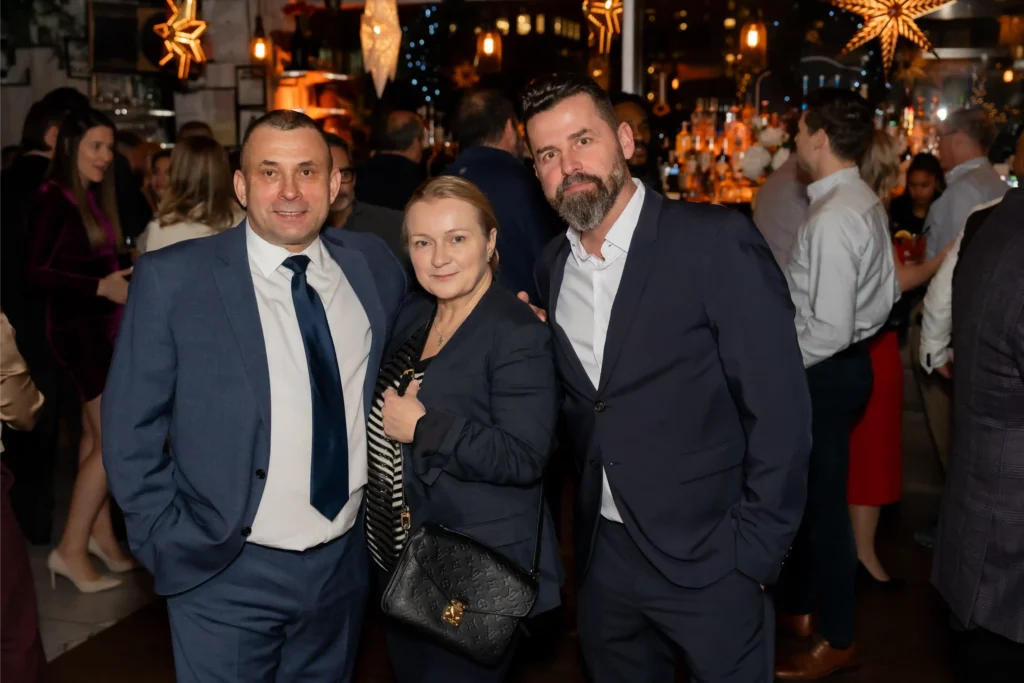
A few realities of corporate venues in NYC make lighting genuinely difficult. Hotel ballrooms often mix warm tungsten house lighting with cool LED stage washes, which creates uneven color temperature across a single frame. Conference rooms frequently rely on harsh overhead fluorescents that flatten faces and create unflattering shadows. Evening receptions and cocktail hours are often intentionally dim for ambiance, which is beautiful for guests and difficult for cameras.
Here is how professional coverage handles it:
- Off-camera flash with bounce or diffusion for networking and reception coverage, angled to fill shadows without looking like a flash was used at all.
- On-camera bounce flash with a diffuser for fast-moving candid coverage where mobility matters more than a fixed lighting setup.
- Available light with a fast lens (wide aperture, often f1.4 to f2.8) for stage and keynote coverage where flash would be distracting to speakers and audiences.
- White balance correction shot by shot, since a single event can shift between tungsten, LED, and daylight sources within the same hour.
- Manual exposure control rather than fully automatic settings, since corporate venues change lighting conditions faster than auto modes can adjust cleanly.
The goal is always the same: images that look natural and professionally lit, never like they were rescued in editing after the fact.
How to Photograph a Corporate Event: Technique and Composition
Beyond lighting, clients often ask how to photograph events or corporate settings in a way that actually captures the energy of the room instead of looking staged. A few principles guide strong corporate event coverage.
Anticipate; do not just react. The best candid shots come from watching body language before a moment happens, whether that is a handshake about to occur or a speaker about to make a key point.
Vary the shot types. Wide shots establish the scale and energy of a room. Medium shots capture interaction between two or three people. Tight shots capture genuine expressions and reactions. A gallery that only has one of these feels flat.
Prioritize genuine expression over posed stiffness. For corporate portraits, a brief prompt like asking someone about a recent win at work almost always produces a more natural expression than asking someone to simply smile at the camera.
Capture branding intentionally. Step-and-repeats, signage, name badges, and product displays need to be photographed cleanly and in focus, since these are the images marketing teams reuse most often outside the event itself.
Work the room systematically. For larger events, moving in a deliberate pattern through the venue prevents over-covering one area while missing entire sections of the event.
Respect the room. Corporate events, especially finance, legal, and healthcare gatherings, often require a quieter, less intrusive approach than a wedding or a birthday party. Silent shutter modes and minimal flash use during formal presentations keep the photographer from becoming a distraction.
Corporate Event Photography Pricing in New York City
This is usually the first question on every planner’s mind, and it deserves a straightforward answer rather than a vague “contact us for pricing” dodge. Understanding how much to charge for corporate event photography, and by extension how to price corporate event photography as a client evaluating quotes, comes down to a handful of factors.
Typical NYC market ranges in 2026:
- Hourly rates for professional corporate event photography in New York City generally fall between 300 and 500 dollars per hour, with most photographers requiring a two-hour minimum.
- Full-day coverage (roughly 8 hours) typically runs between 2,000 and 4,500 dollars, depending on the photographer’s experience and the complexity of the event.
- Multi-day conferences or summits are usually quoted as a package, often between 4,000 and 10,000 dollars or more, depending on the number of photographers, locations, and deliverables required.
- Adding a second photographer for large events typically adds 300 to 500 dollars per hour to the total.
- Rush delivery (same-day or next-day image turnaround) often carries an additional fee, since it requires editing during or immediately after the event rather than over several days.
What actually drives the price up or down:
- Number of hours and photographers needed. A single photographer covering a two-hour breakfast panel costs far less than two photographers covering a full-day summit with breakout sessions.
- Turnaround time. Standard delivery within a week costs less than same-day or next-day rush delivery, which requires on-site or overnight editing.
- Usage rights. Internal use only is typically less expensive than full commercial usage rights for advertising, press, and paid social campaigns.
- Venue complexity. Multi-room conferences, outdoor components, or venues with strict security and access requirements add planning time that factors into the quote.
- Deliverable volume. Clients who need 300 fully edited images from a four-hour event should expect a different price than those who need 50.
- Add-ons. Headshot stations, drone coverage where permitted, and video coverage bundled with photography all shift the total.
For a planner trying to figure out how to price corporate event photography for a budget proposal, a useful rule of thumb is to estimate roughly 400 dollars per hour of coverage for a single experienced photographer in New York City, then adjust up for rush turnaround, additional shooters, or expanded usage rights, and adjust down slightly for longer full-day bookings where hourly rates typically decrease.
The most reliable way to get an accurate number, rather than a rough estimate, is to share the event date, venue, expected headcount, and how the images will be used. A serious photographer should be able to send a clear, itemized quote within a day or two.
What to Look for When Hiring a Corporate Event Photographer in NYC
Not every photographer who lists “events” on their website is equipped for corporate work. Before booking, it is worth confirming a few things.
- A portfolio of actual corporate events, not just weddings or personal portraits relabeled as event work.
- Proof of insurance readiness. Most NYC venues, especially hotels and office buildings, require a certificate of insurance before allowing a vendor on site. A photographer who has never dealt with this will slow down your planning.
- A clear turnaround policy in writing, including what standard delivery looks like and what a rush fee covers.
- Clarity on usage rights, so there is no confusion later about whether images can be used in paid advertising versus internal newsletters only.
- Experience with your event type. A photographer skilled at intimate boardroom portraits is not automatically the right fit for a 1,500-person trade show floor, and vice versa.
- A backup plan. Equipment fails, and photographers get sick. Ask what happens if your photographer cannot make it, and whether a second shooter or backup is available.
Areas We Serve Across New York City
Frame By Frame USA covers corporate events throughout Manhattan, Brooklyn, Queens, and the greater New York metro area, including Midtown hotel ballrooms, Financial District office towers, the Javits Center, SoHo and Chelsea galleries and event spaces, and Long Island City venues. Wherever your event is happening, we plan around the building’s specific access requirements ahead of time so event day runs smoothly.
Why Choose Frame By Frame USA
Corporate clients come back to us for a few consistent reasons. We understand how New York venues operate, from freight elevators to COI requirements, so nothing derails your schedule on event day. We shoot with a documentary eye but a marketing brain, meaning every image is captured with its eventual use in mind, whether that is a press release, a careers page, or a sponsor recap deck. We communicate clearly on pricing before booking, so there are no surprises on the invoice. And we deliver on time, every time, because we know a late gallery is often a missed opportunity for your marketing team.
If you are planning a conference, product launch, gala, or executive event anywhere in New York City, we would welcome the chance to talk through your event and put together a clear, straightforward quote.
FAQ,s
How much does corporate event photography cost in New York City?
Most professional corporate event photographers in NYC charge 300 to 500 dollars per hour, with a two-hour minimum. Full-day coverage typically ranges from 2,000 to 4,500 dollars, depending on experience, turnaround speed, and usage rights required.
How do I choose the right corporate event photographer?
Look for a portfolio of actual corporate events, proof they can handle venue insurance requirements, clear turnaround timelines, and defined usage rights. Ask how they handle low light and fast-paced networking coverage before booking.
How far in advance should I book event photography in NYC?
For most corporate events, book 3 to 6 weeks in advance to secure your preferred photographer. Large conferences or multi-day summits often require booking 2 to 3 months ahead, especially during busy fall and spring event seasons.
Do corporate event photographers provide same-day photos?
Many photographers, including Frame By Frame USA, can deliver a small batch of edited images the same day for press or social media needs, with the full gallery following within 3 to 5 business days unless rush delivery is requested.
What is included in a typical corporate event photography package?
Packages typically include a set number of coverage hours, a fully edited digital gallery, and usage rights for the agreed purposes. Add-ons like a second photographer, headshot stations, or rush delivery are usually priced separately.
Can one photographer cover a large conference alone?
For events with multiple simultaneous sessions or over 300 attendees, a second photographer is usually recommended to ensure full coverage of breakout rooms, networking, and main stage content without gaps.